
Purchasing Books from Local Authors: A 2026 How-To Guide
Table of Contents
- Why Purchasing Books from Local Authors Matters for Your Community
- How to Find Books Written by Authors in Your Area
- What You'll Need Before You Buy Direct
- The Benefits of Buying from Independent Authors
- How to Review Books by Local Authors
- How to Promote Local Authors on Social Media
- Common Mistakes to Avoid When Purchasing Books from Local Authors
- Frequently Asked Questions
Last Updated: September 16, 2026
Why Purchasing Books from Local Authors Matters for Your Community
Purchasing books from local authors is one of the most direct ways to strengthen your community's literary ecosystem. Every copy you buy keeps money circulating in the regional economy, funds the next manuscript, and tells independent booksellers that local voices deserve shelf space. This guide from Warren Robinson Books walks through how to find area writers, what to check before you buy, and how to promote the authors you love.
The impact compounds in ways that are easy to underestimate. A single sale at a book signing can lead to a stocking agreement with a store manager, which leads to a local author bookcase near the register, which leads to more readers discovering regional literature they would never have found on a national bestseller list. Independent booksellers function as community hubs, and the authors they carry become part of that network.
The numbers tell a different story than the "print is dead" narrative. According to American Booksellers Association membership data, independent bookstore membership has grown substantially over the past decade after years of decline, and much of that growth comes from stores leaning into local and niche titles rather than competing with big-box retailers on bestsellers.
That shift matters for readers. It means the book you want may be sitting on a shelf two miles from your house, not in a warehouse three states away.
How to Find Books Written by Authors in Your Area
Finding local authors starts with three channels: independent bookstores, library programming, and regional author directories. Most communities have more published writers than residents realize, and each channel surfaces a different slice of them.
Independent bookstores remain the single best discovery tool. Ask the store manager whether they maintain a local author bookcase or a regional literature section. Many stores keep a dedicated shelf near the front, and the staff usually know which titles move and which ones customers keep asking about. Library systems run author readings, book clubs, and "meet the writer" nights that function as low-pressure introductions to regional talent.
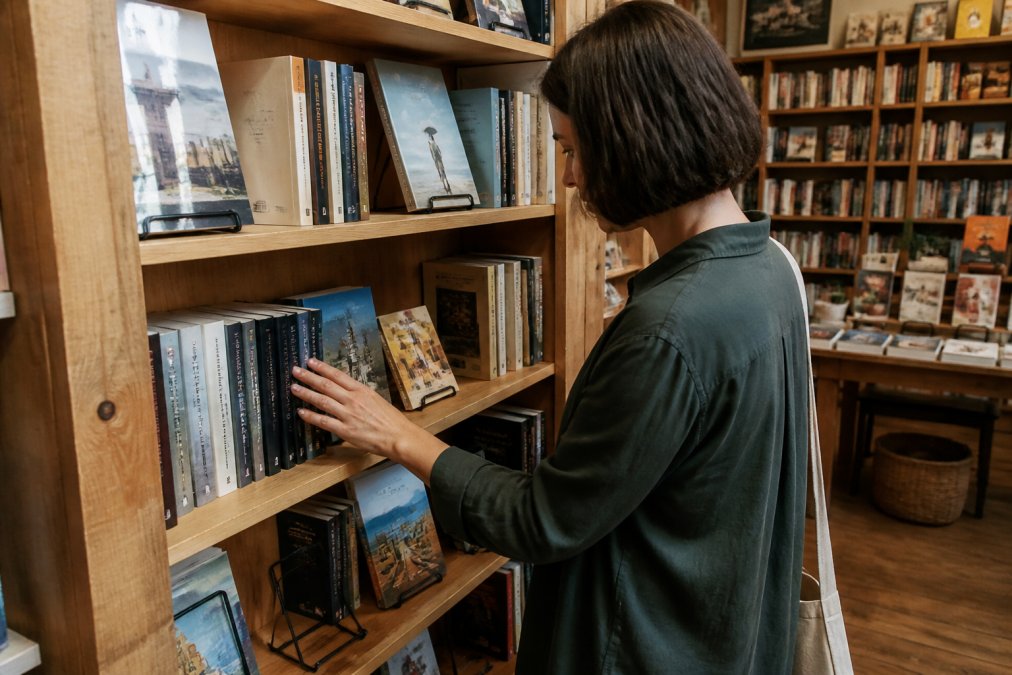
Word of mouth still outperforms almost everything else. Ask at your next book club meeting, at the farmers market, or in a neighborhood forum. A common approach is to follow regional literary organizations and small presses on social media, since they announce new releases and signings long before a general audience hears about them.
Digital Discovery Tools for Local Authors
Digital discovery tools for local authors are online platforms, directories, and search methods that connect readers to writers in their region without requiring an in-person visit. These tools matter most for readers who cannot easily get to a bookstore or who want to browse before committing to a trip.
Several approaches work well:
- Search a bookstore's website for a "local authors" or "regional interest" filter, then sort by newest arrivals
- Follow independent booksellers and small presses on social media, where new releases are announced first
- Check library event calendars, which often list author appearances weeks in advance
- Use author directory listings maintained by regional writers' guilds and arts councils
- Set up alerts for a specific author's name so you learn about signings and new titles
The advantage of digital discovery is speed. You can identify three or four authors in your area in an afternoon, then decide which events are worth attending in person. Where most readers fall short is stopping at the search. A directory listing tells you an author exists; only a store visit or an event tells you whether their writing suits you.
What You'll Need Before You Buy Direct
Buying directly from an author or an independent store is straightforward, but a little preparation prevents most of the friction. Here is a short checklist:
- Confirm the format you want: physical copy, ebook, or audiobook
- Check whether the title is in stock or printed on demand, since availability varies by title
- Ask about the return policy before you pay, especially for signed copies
- Confirm the currency and the final total, including any shipping, before you commit
- Decide whether you want a signed or personalized copy, which usually requires buying in person or through a direct order
- Note the publication date and edition if you are buying for a collection
That last point about currency and total cost is worth emphasizing. Readers occasionally encounter listings priced in a currency other than dollars, which makes it hard to know what you are actually paying until checkout. Ask for the total in dollars before you commit, or buy through a store that prices in dollars by default.
The Benefits of Buying from Independent Authors
The benefits of buying from independent authors fall into three categories: money that stays local, a shorter path from writer to reader, and access to niche genres that large publishers rarely prioritize.
Revenue share is the clearest difference.
Consignment, Trade Discounts, and Sale-or-Return Explained
Consignment is an arrangement where a bookstore stocks an author's books without buying them outright; the store pays the author only after a copy sells, and unsold copies typically return to the author. Trade discount is the percentage off the retail price that a store pays a publisher or distributor for wholesale copies. Sale-or-return is a policy that lets a retailer send unsold stock back to the supplier for credit.
| Term | What It Means | Who Carries the Risk | Typical Use |
|---|---|---|---|
| Consignment | Store pays author after a sale | Author | Self-published and local titles |
| Trade discount | Store buys at a percentage off retail | Store | Traditionally published books |
| Sale-or-return | Unsold stock returns for credit | Publisher or author | Seasonal and event stock |
| Direct-to-consumer | Reader buys straight from author | Neither | Signed and specialty copies |
How to Review Books by Local Authors
Reviewing books by local authors follows the same standards you would apply to any title, with one adjustment: be specific about what makes the book worth a reader's time. A useful review answers three questions: what the book is about, who it suits, and whether it delivers on its promise.
How to Promote Local Authors on Social Media
Promoting local authors on social media works best when you treat it as recommendation, not advertising. Readers respond to a genuine "I finished this last night and here is what stayed with me" far more than to a reposted cover image with no context.
A simple framework that gets results:
- Post a photo of the book in a real setting, not a stock image
- Write two or three sentences on what the book is about and who would like it
- Tag the author and the bookstore if they have accounts
- Link to the author's page or the store's listing, not a generic retailer search
- Mention the genre in plain words so the post is findable later
Common Mistakes to Avoid When Purchasing Books from Local Authors
The biggest mistake readers make is treating a local purchase as a favor rather than a normal buying decision. That mindset leads to lower expectations, which leads to disappointment, which leads to fewer local purchases next time. Expect the same quality you would from any book, and review it the same way.
Frequently Asked Questions
Why is it important to support local authors?
Buying from local authors keeps more money in the regional economy than purchasing through large online retailers. Independent booksellers and self-published writers often operate on thin profit margins, so each sale directly funds the next book. Local authors also anchor community hubs, host book signings, and stock niche genres that big chains overlook. When you buy a memoir or small-town story from a neighborhood writer, you help sustain a literary ecosystem that reflects your own region.
Does buying directly from an author help them more than buying from a retailer?
Yes. When you buy direct, the author keeps a larger share of the sale instead of splitting it with a distributor or store. Retailers typically take a trade discount of around 40 to 55 percent off the cover price, and consignment arrangements may add another cut. Buying direct also gives the author your contact information for future book launches. If you want a signed copy or a quick answer about inventory, going straight to the source is usually faster too.
How do I leave a review for a local author's book?
Read the book, then post an honest review on retailer sites, Goodreads, or your own social media. Keep it specific: mention what worked, who the book suits, and one memorable detail. A 100-to-200-word review carries more weight than a one-line rating. If the author sells through their own site, ask whether they accept testimonials you can share. Reviews help undiscovered talent surface in search results and give other readers confidence before they buy.
Can I request local author books at my neighborhood bookstore?
Most independent bookstores will order a title if it is available through a distributor, and many will stock self-published books on consignment. Ask the store manager directly and provide the title, author name, and ISBN. Some shops keep a dedicated local author bookcase and welcome stocking agreements. If the store cannot source the book, contact the author about ordering direct. Either path supports the same goal: getting regional literature onto shelves where readers can find it.