
Support Georgia Based Book Authors: A 2026 Guide
Table of Contents
- Why Supporting Local Authors Matters for Regional Heritage
- Benefits of Buying Books from Independent Authors
- Georgia Writers Association Resources and Literary Societies
- How to Review Books by Local Authors to Boost Visibility
- Consignment Programs and Local Distribution for Authors
- Marketing, Editing, and Cover Design Support
- Conclusion: Building a Sustainable Literary Community
- Frequently Asked Questions
Last Updated: September 23, 2026
Why Supporting Local Authors Matters for Regional Heritage
When you buy a book from an independent writer, you're keeping a regional story alive. This guide from Warren Robinson Books explains how to support Georgia based book authors through reviews, consignment, events, and direct purchases.
Benefits of Buying Books from Independent Authors
Buying from independent authors keeps money circulating locally and surfaces stories national publishers overlook. The benefits of buying books from independent authors extend well beyond the individual sale.
Keeping More Money in the Local Economy
A local purchase circulates through bookstores, printers, editors, and event venues in the same region, keeping a larger share of the money close to home.
- Direct sales often mean higher author royalties
- Independent bookstores keep inventory decisions local
- Local printers and designers get repeat work
Authentic Stories You Won't Find in Big Box Stores
Regional memoirs, small-town humor, and family histories rarely make national bestseller lists, yet they carry regional heritage that mass-market catalogs ignore.
Georgia Writers Association Resources and Literary Societies
The Georgia Writers Association and regional literary societies connect authors with mentors, workshops, and publishing leads that are hard to find alone.
Finding Mentorship and Professional Development
Mentorship is one of the most underused resources for new writers. A seasoned author can review a manuscript, explain query letters, and warn against publishing traps.
- Monthly critique groups
- Access to creative writing workshops
- Introductions to agents and editors
- Professional development sessions on marketing and contracts
Grant Funding and Publishing Opportunities
Grant funding exists through state arts councils, nonprofit literary organizations, and university programs, often supporting manuscript completion, conference travel, or a first book launch.
How to Review Books by Local Authors to Boost Visibility
Learning how to review books by local authors is one of the fastest ways to help a writer gain traction, a thoughtful review beats a dozen social media likes.
Here's a simple approach:
- Read the book fully before writing anything
- Post the review on at least two platforms (retailer site and a personal blog or social channel)
- Mention the genre, tone, and who the book is best for
- Avoid spoilers in the first half of the review
- Tag the author and publisher when the platform allows it
Consignment Programs and Local Distribution for Authors
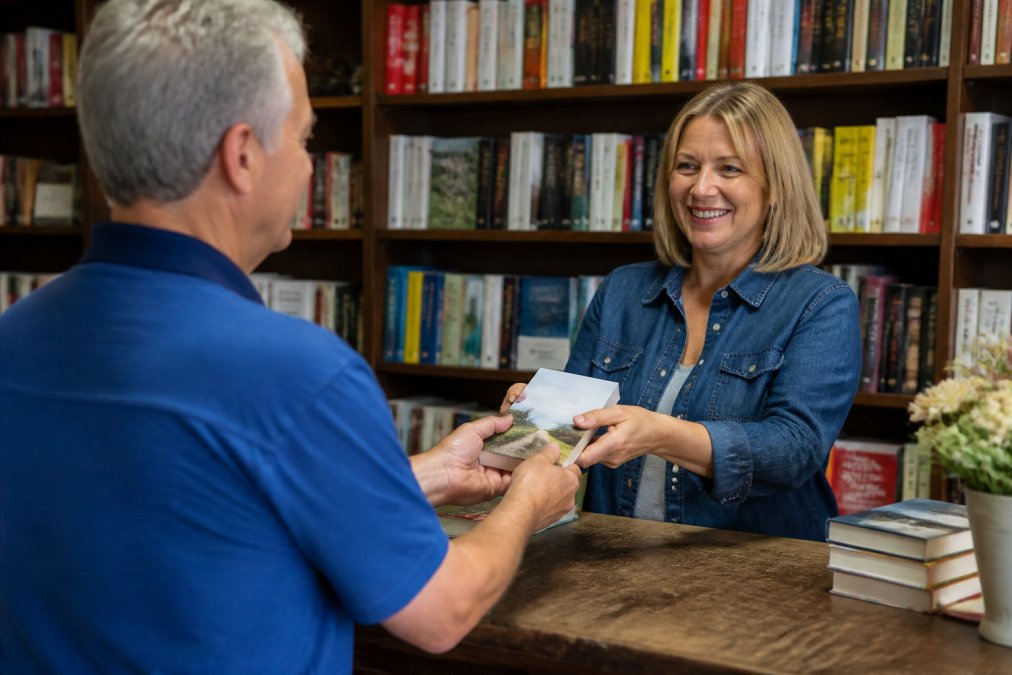
Consignment programs let independent bookstores stock local titles without paying upfront: the store sells the book, keeps an agreed share, and pays the author for what moves. Terms vary widely, and authors who don't understand the mechanics often lose money or inventory.
What Standard Consignment Terms Actually Look Like
Most independent bookstores work on a 60/40 split in the store's favor, though 70/30 and 50/50 arrangements exist depending on the store's size and the author's local following. A few common patterns:
- Split: The store typically keeps 40% of the cover price; the author receives 60%. Some stores flip this for high-demand local titles.
- Duration: Terms usually run 90 to 180 days, after which unsold copies are returned or the agreement renews.
- Payment cycle: Most stores pay monthly or quarterly, often after the close of the month in which the sale occurred.
- Returns: Authors are usually responsible for picking up unsold stock; some stores charge a restocking fee.
- Damage: Stores generally cover damage that occurs on the shelf, but not damage from shipping or handling by the author.
Approaching Independent Bookstores
Approach bookstores once you have a finished, professionally edited book and a one-page summary. Bring a physical copy, not just a PDF.
- Call ahead and ask for the events or local authors contact, not the front desk
- Bring a sell sheet: title, genre, price, ISBN, trim size, page count, and a short pitch
- Offer to do a book signing or reading to drive traffic
- Be clear about consignment terms and return policy before you leave the store
- Follow up within two weeks if you don't hear back
A Step-by-Step Local Launch Sequence
Most guides list resources but skip execution. Here's the sequence that works for a regional title:
- Six months out: Finalize the manuscript, hire an editor, and lock the cover. Nothing else matters until the book is real.
- Four months out: Build a one-page sell sheet and a simple author website with a mailing list signup. Start collecting emails at every event you attend.
- Three months out: Pitch three to five independent bookstores in your region for consignment. Ask each one about a launch event date.
- Two months out: Pitch local press, community newspapers, public radio, library newsletters. Lead with the human story, not the book.
- One month out: Confirm your launch event, order a print run that covers consignment plus direct sales, and schedule two to three smaller readings at libraries or cafes.
- Launch week: Post daily, tag the stores, and ask every attendee to leave a review. Reviews are the single highest-leverage ask.
- Post-launch: Follow up with each store on sales, restock what's moving, and pitch a second event for the holiday season.
Securing Book Signings and Readings at Independent Venues
Libraries, breweries, coffee shops, museums, and community centers also host author events, often with less competition for dates. The mechanics are similar:
- Pitch 8-12 weeks ahead. Venues book calendars a season out.
- Lead with what you bring. A reading plus Q&A, a signing, a themed night, a partnership with a local group.
- Offer to bring the audience. Venues care about foot traffic. Tell them how many people you can realistically draw.
- Ask about their setup. Do they have a mic, a podium, a table? Do they sell books or do you?
- Confirm the split. If the venue sells your book, agree on terms in writing before the event.
Marketing, Editing, and Cover Design Support
Strong book promotion starts long before launch day. The right support depends on your publishing path.
Self-Publishing vs. Traditional: What Changes for Support
Most regional authors face the same fork in the road. How support needs differ:
- Traditional publishing: The publisher covers editing, cover design, and distribution. Your job is the query letter, the agent search, and the platform you bring to the table. Advances for debut regional titles are often modest, and timelines run 18-24 months from acceptance to shelf.
- Self-publishing: You fund and manage editing, cover design, formatting, and distribution. You keep a much higher royalty per copy, often 60-70% on print and up to 70% on ebooks through major platforms, but you also carry the upfront cost and the marketing load.
- Hybrid: Some authors self-publish a regional title for local sales while pursuing traditional deals for a different manuscript. This is more common than most guides admit.
What Each Service Actually Does
- Developmental editing: Structural work, pacing, chapter order, character arcs, argument flow. This is the most expensive and most important edit. Do this before anything else.
- Line editing: Sentence-level polish, clarity, voice, rhythm. Comes after developmental edits are locked.
- Copy editing: Grammar, consistency, fact-checking, style guide adherence. Comes after line edits.
- Proofreading: The final pass for typos and formatting before print. Never skip this, even on a tight budget.
- Cover design: Signals genre and quality at a glance. A cover that looks amateur will kill sales regardless of the writing inside.
- Interior formatting: Often overlooked. Bad margins, wrong trim size, or inconsistent headers make a book feel self-published in the worst way.
Choosing Providers Without Getting Burned
First-time authors often hire the cheapest editor or the first designer who responds, which almost always costs more later. Practical filters:
- Ask for a sample edit on 5-10 pages before committing to a full manuscript.
- Check genre fit. An editor who specializes in romance may not be right for military memoir.
- Get a written scope. Word count, number of passes, turnaround time, and revision rounds should all be in the contract.
- Avoid package deals that bundle everything. Bundling often hides weak editing behind a polished cover.
- Verify the designer's portfolio includes covers in your genre, not just general graphic design.
Local Marketing That Actually Moves Books
Digital marketing gets the attention, but for a regional title, local press and in-person events usually outperform social media. One well-placed community newspaper feature often drives more sales than weeks of posts.
A practical local marketing mix:
- Local press: Pitch the human story, why you wrote it, what it's about, why it matters here, not just the book.
- Library partnerships: Offer a reading, a workshop, or a donation. Librarians talk to readers all day.
- Email list: Build it from day one. Even a few hundred engaged local readers outsells thousands of passive social followers.
- Podcasts and local radio: Regional shows are always looking for local guests.
- Book festivals and farmers markets: Low-cost tables that put the book in front of buyers.
- Cross-promotion: Partner with other local authors to share audiences.
Conclusion: Building a Sustainable Literary Community
A sustainable literary community is built one reader, one review, and one local purchase at a time. When you support Georgia based book authors, you fund the next memoir, children's story, or small-town tale that might otherwise never get written.
Frequently Asked Questions
How does buying directly from an author help them more than retail chains?
When you buy directly from an independent author, they typically keep a much larger share of the sale price. Retailers and distributors take a cut that can leave the author with a small fraction of the cover price. Buying direct also gives the author immediate feedback and a direct connection with readers, which helps them plan future print runs and understand what resonates with their audience.
What is the best way to review books by local authors to help their visibility?
Post honest reviews on major platforms like Goodreads, Amazon, and Barnes & Noble, and mention the book on social media. Reviews help algorithms recommend the book to new readers. Keep your review specific: mention what you liked, who the book is for, and why it stood out. Even a short, thoughtful review can make a difference for an independent author who does not have a large marketing budget.
Are there specific organizations that support writers in Georgia?
Yes. The Georgia Writers Association offers resources such as workshops, networking events, and manuscript feedback. Local literary societies and nonprofit organizations also provide mentorship, grant funding information, and community outreach programs. Many independent bookstores host author events and consignment programs that help regional writers reach new readers. Checking with your local library or arts council is another good starting point.
What are the benefits of joining a local literary society?
A local literary society connects you with other writers, editors, and publishers in your area. Members often share calls for submissions, grant opportunities, and professional development workshops. These groups also organize read aloud initiatives, book signings, and community outreach events that raise your profile. For independent authors, the peer support and local networking can be just as valuable as the formal resources.