
Why Read Personal Military Memoirs: A Reader's Guide
Table of Contents
- Why Read Personal Military Memoirs? A Firsthand Account Beats a Textbook
- The Benefits of Reading Military Memoirs: Empathy, Memory, and Perspective
- How to Identify Authentic Military Memoirs
- Memoir vs. Autobiography vs. Oral History vs. Military History
- How to Choose the Best Military Memoirs for You
- How to Read a War Memoir Critically
- Friendship, Resilience, and Community: What Memoirs Teach Beyond the Battlefield
- Conclusion: Preserving the Veteran Voice One Story at a Time
- Frequently Asked Questions
Last Updated: October 19, 2026
Why Read Personal Military Memoirs? A Firsthand Account Beats a Textbook
A military memoir is a firsthand account of military service written by the person who lived it, and that personal perspective changes how you understand war in ways a textbook never can. At Warren Robinson Books, we have built our catalog around exactly this idea: that a soldier's own words carry a kind of truth no summary can reproduce.
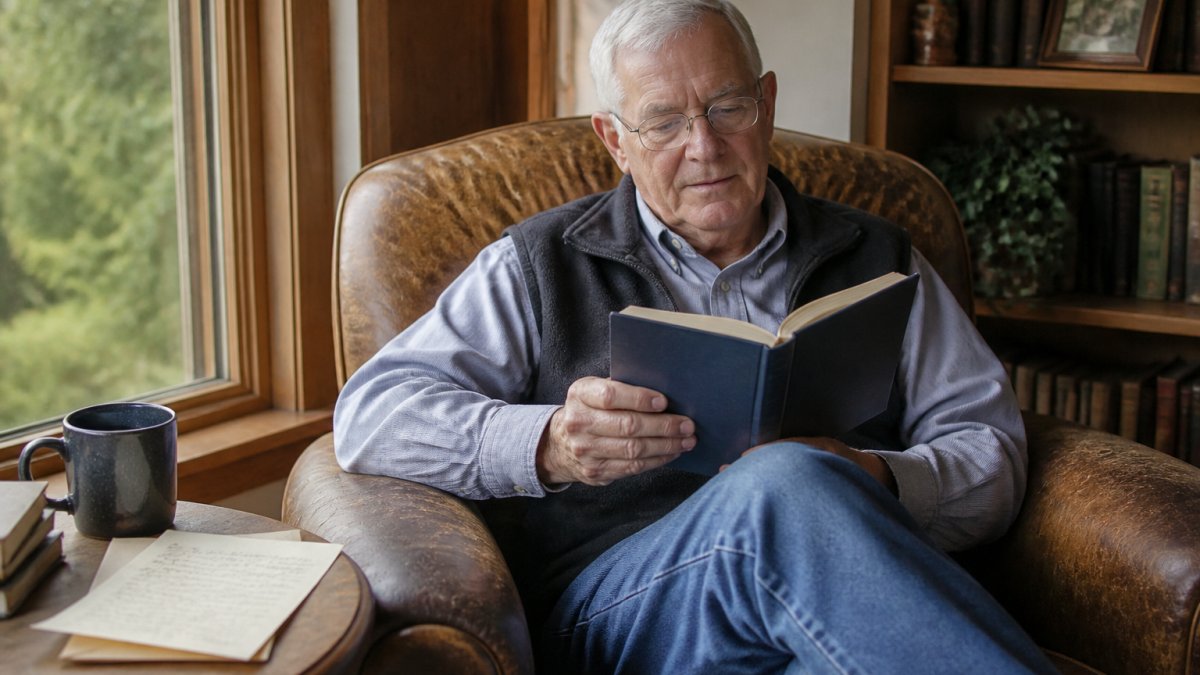
What a Memoir Does That a History Book Cannot
A history book tells you what happened. A memoir tells you what it felt like while it was happening. That distinction matters more than most readers expect. Historians work from records, after-action reports, and interviews conducted years later.
That is why the best military memoirs read less like reference material and more like a conversation. You get the fear before the battle, not just the outcome.
The Benefits of Reading Military Memoirs: Empathy, Memory, and Perspective
The benefits of reading military memoirs come down to three things: empathy, memory, and perspective. Each one is hard to build from secondhand sources. A memoir puts you inside a worldview you may never share, and that exercise does something a documentary cannot. It slows you down, forces you to sit with discomfort, and asks you to understand a decision you might have made differently.
Understanding the Human Impact of Conflict
Many readers come to war memoir literature expecting tactics and timelines. What they find instead is the human impact of conflict: the friendships that form under pressure, the loss that never fully resolves, and the ordinary people who discover reserves of courage they did not know they had. That is the part history tends to flatten. A memoir restores it.
Duty, Fear, Courage, and Sacrifice on the Page
Duty, fear, courage, and sacrifice are abstractions in a textbook. In a personal account, they become specific. You see a soldier who is terrified and does the job anyway. You see loyalty that has nothing to do with patriotism and everything to do with the person in the next bunk. Reading these moments builds a more honest understanding of military service than any summary can offer.
How to Identify Authentic Military Memoirs
Authenticity is not the same as accuracy, and the two get confused constantly. A memoir can be entirely authentic, the author really served, really remembers it this way, and still contain compressed timelines, merged characters, and reconstructed dialogue. Most working editors treat that as normal memoir craft rather than deception.
A few concrete signals separate a service memoir from a marketing product:
- A stated service record. Branch, unit, rank, military occupational specialty, and deployment dates should appear in the text or the author's note. Vague phrasing like "served overseas" without a unit or theater is a yellow flag, not a disqualifier.
- A named co-author or ghostwriter, disclosed. Many legitimate memoirs are written with a professional collaborator. That is fine. What matters is whether the book says so. Undisclosed ghostwriting in a first-person combat narrative is the thing to watch for.
- Specific place names and operation names. Authentic accounts tend to include the small, unglamorous specifics, a firebase designation, a radio frequency, a chow hall nickname, because those are what memory holds onto. Books that stay at the level of "the desert" and "the enemy" are usually doing so for a reason.
A practical screening routine: read the author's note and the first ten pages of the combat chapter.
For readers who want to go further, the critical-reading section below covers how to weigh a memoir's claims against a military history of the same period without dismissing the personal account.
Memoir vs. Autobiography vs. Oral History vs. Military History
These four forms get mixed up constantly, and the mix-up causes real reading problems, people pick up a memoir expecting a campaign history, find the dates don't line up, and conclude the book is unreliable.
| Form | Author's Role | Scope | What It Can Establish | What It Cannot |
|---|---|---|---|---|
| Memoir | Participant | A defined slice of life, usually the service years | What service felt like, how one person made sense of it, the texture of daily life | Complete chronology, unit-level accuracy, the view of anyone outside the author's vantage point |
| Autobiography | Participant | An entire life, childhood onward | How military service fit into a larger life and identity | The same limits as memoir, plus the distortions of retrospective shaping over decades |
| Oral history | Interviewee, guided by an interviewer | Focused question-and-answer sessions, often transcribed | Raw, unpolished testimony; the interviewer's questions are visible in the record | A finished narrative; the interviewee's edits and second thoughts are usually absent |
| Military history | Researcher | A campaign, unit, or war, built from records and multiple sources | Chronology, order of battle, strategy, context, corroborated events | What any single participant experienced, felt, or believed |
The useful distinction is between testimony and history. A memoir and an oral history are testimony: they tell you what one person saw and how they remember it.
A few practical implications for readers:
- If you want to understand a battle, read a military history first, then a memoir from inside it. The history gives you the shape; the memoir gives you the inside. Reading them together is the single best way to use personal accounts responsibly.
- If you want to understand a person, start with the memoir. A military history will tell you where the unit was; only the memoir tells you what the author thought about it at 2 a.m.
- If you are researching a family member's service, use oral histories and unit records together. Oral history projects run by service-branch associations and veterans' organizations often hold interviews that never became books.
- If you are writing about a memoir, cite it as testimony. "In his memoir, the author recalls..." is accurate. "The unit did X" is a claim that needs a history to back it.
If your goal is to understand the human impact of conflict, start with a memoir and pair it with a military history of the same conflict. If your goal is to understand the conflict itself, reverse the order.
How to Choose the Best Military Memoirs for You
The best military memoirs match your reason for reading. That sounds obvious, but most readers pick by cover or reputation and end up with a book that does not fit. Ask yourself what you actually want: a specific conflict, a specific role, or a specific theme like resilience or friendship.
- Want the Vietnam War era? Look for memoirs by veterans who served in-country, with clear unit and tour details.
- Want a specific role? Medics, pilots, and infantrymen each tell very different stories.
- Want emotional depth over tactics? Choose a memoir with a reflective, literary reputation.
- Want variety? Read across conflicts, branches, and backgrounds to see how service changes with the era.
A Practical Selection Checklist
Use this checklist before you buy:
- Does the author state branch, unit, rank, and dates of service?
- Is the conflict and theater clearly identified?
- Does the book include both difficult and hopeful moments?
- Have you read a sample chapter to check the writing style?
How to Read a War Memoir Critically
Read a war memoir critically by treating it as one person's memory, not the definitive record. Memory is selective. A veteran writing decades later is reconstructing events through the lens of everything that happened since. That does not make the account false. It makes it personal.
A few habits help:
- Read the introduction and any historical notes first.
- Note where the author admits uncertainty or gaps in memory.
- Cross-check major events against a military history of the same period.
- Pay attention to what the author chooses to emphasize or skip.
- Consider the publication date and how much time passed before writing.
Friendship, Resilience, and Community: What Memoirs Teach Beyond the Battlefield
Friendship, resilience, and community are the themes readers remember longest, and they rarely appear in official accounts. A memoir shows how bonds form under pressure, how people endure boredom and fear side by side, and how a sense of community carries people through circumstances they could not face alone.
We have seen this repeatedly at Warren Robinson Books, where readers tell us that a veteran voice on the page opened a door at home. That is the quiet power of storytelling: it preserves memory and builds understanding at the same time.
Conclusion: Preserving the Veteran Voice One Story at a Time
The veteran voice fades if no one reads it. Every personal account you pick up helps preserve a piece of historical memory that would otherwise disappear, and it shapes your own understanding of service, sacrifice, and resilience in the process. If you are ready to start, explore the military memoirs at Warren Robinson Books, where each title is chosen for authenticity and priced fairly.
Frequently Asked Questions
What can readers learn from a veteran's personal account that they can't get elsewhere?
A veteran's personal account shows war at eye level: the fear before a patrol, the loyalty to the person beside you, the small routines that hold a unit together. Official histories record dates and objectives, but they rarely capture what a deployment felt like day to day. Reading personal military memoirs builds empathy for the human impact of conflict and preserves the veteran voice in a way that a summary never can. That is one of the core benefits of reading military memoirs, and it is why firsthand accounts stay relevant long after the events themselves.
How can you tell whether a military memoir is authentic?
Start with the author's service record: name, branch, unit, rank, and dates of deployment should be specific and checkable. Authentic military memoirs usually name real places and units, describe ordinary boredom alongside danger, and avoid perfect hindsight. Look for a publisher that verifies the author's background, and read the introduction for how the book was written, whether from journals, letters, or memory. Be cautious with books that lean on dramatic claims without specifics. A short sample chapter often reveals whether the voice feels lived-in or manufactured.
What are the best military memoirs to start with?
The best military memoirs depend on what you want from the experience. Readers new to the genre often start with a memoir set in a conflict they already know something about, since context makes the personal level easier to follow. If you are drawn to the Vietnam War era, look for books by veterans who served in specific roles, such as infantry, medics, or pilots, because the perspective shapes the story. Read a sample first, check reader reviews, and pick a voice that holds your attention. Depth of feeling matters more than a famous title.
Are military memoirs too heavy for readers who mostly want lighter stories?
Not all of them. Many veteran authors write with dry humor about training, barracks life, and the absurd moments of service, and those passages often sit beside the harder chapters. If heavy content is a concern, read reviews for content warnings, start with a memoir known for a humorous tone, and keep a lighter book nearby to switch to. Understanding the human impact of conflict does not require reading only grim material. A balanced reading list can include both poignant reflections and stories that make you laugh.
The stories worth keeping are the ones someone took the time to read. Start with a memoir, share it with a family member, and keep the veteran voice alive for the next reader.