
Military Memoirs vs Historical Fiction: 2026 Guide
Table of Contents
- What Separates a Military Memoir From Historical Fiction
- Truth Claims vs Narrative Freedom: How the Two Genres Differ
- Military Memoir Accuracy: Memory, Records, and Reliability
- How to Verify a Military Memoir Before You Read
- Best War Memoirs and Historical Fiction: A Reader's Decision Guide
- Ethical Boundaries When Fiction Borrows From Real Combat
- Conclusion: Choosing the Right Book for the Right Reason
- Frequently Asked Questions
Last Updated: October 12, 2026
What Separates a Military Memoir From Historical Fiction
A military memoir is a firsthand account of military service written by the person who lived it, while historical fiction is an invented story set against real historical events. This guide from Warren Robinson Books breaks down the military memoirs vs historical fiction divide so you can pick the right book for the right reason.
Both genres sit on the same shelf and can put you in a foxhole or a cockpit, but they make very different promises to the reader, and knowing which promise you're getting changes how you read every page.
Definitions: Memoir, Historical Fiction, and Nonfiction History
A memoir is a book built from the author's own memory of events they personally experienced. Unlike an autobiography, it focuses on a period, a place, or a theme rather than a full life story.
Historical fiction is a novel set in a real time and place, with invented characters and plot. The setting may be meticulously researched, but the story itself is made up.
Nonfiction history is a factual account built from records, documents, and research. The author may not have been there at all.
Here is how the three compare at a glance:
| Type | Author Was There? | Characters | Main Source |
|---|---|---|---|
| Memoir | Usually yes | Real people | Memory and reflection |
| Historical fiction | No | Invented | Research plus imagination |
| Nonfiction history | No | Real people | Archives and records |
Truth Claims vs Narrative Freedom: How the Two Genres Differ
The core tension is simple. Memoir is bound by what happened. Historical fiction is free to invent. A memoirist who invents a battle loses the reader's trust. A novelist who sticks too closely to the record may flatten the story.
First-Person Perspective and Lived Experience
Memoir lives in the first person. When a veteran writes "I remember the smell of the rice paddies," that sentence carries weight because the writer was standing there.
Historical fiction can also use first person, but the voice is a performance. The novelist imagines what a soldier might have felt. Done well, it can feel just as real. Done poorly, it reads like a costume.
The difference matters most in what the reader takes away. A memoir offers a direct witness. A novel offers a window into someone else's imagined witness.
Fictional Characters, Invented Details, and Real Events
Historical fiction often places invented characters inside real events. A made-up platoon can fight at a real battle. A fictional nurse can work in a real field hospital.
This narrative freedom is powerful, letting an author fill gaps the record leaves open.
The risk comes when readers forget which parts are real. A novel can shape how people remember a war, a heavy responsibility the best authors handle with care.
Military Memoir Accuracy: Memory, Records, and Reliability
Military memoir accuracy depends on three things: the author's memory, the available records, and honest labeling of both.
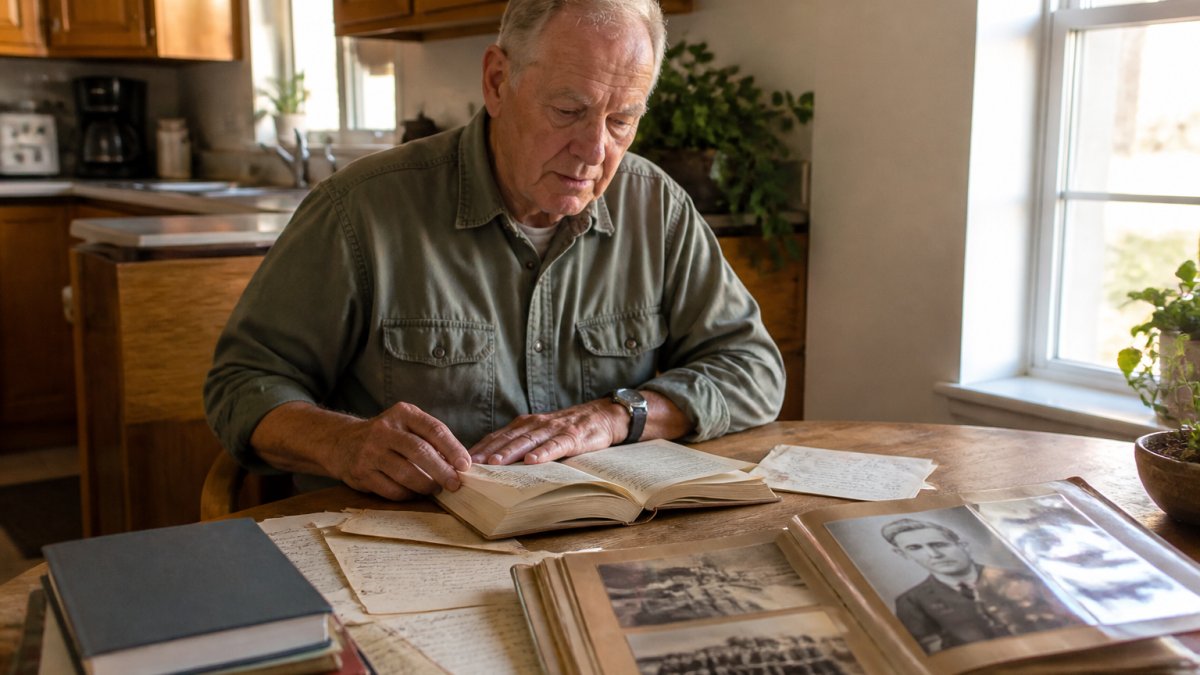
Reconstructive memory. Human memory is not a recording.
Hindsight bias and retrospective interpretation. A memoir written at twenty-two reads differently from one written at seventy.
Trauma and gaps. Combat memoirs often contain blank spots around the worst events. Some authors write around them; some reconstruct them from after-action reports or buddy statements.
How to Corroborate a Memoir Against the Record
You do not need to be a historian to check a memoir's spine. A few public sources let you test the load-bearing facts.
- Unit histories and lineage. Every branch maintains official unit histories. If a memoir claims the author served in a specific battalion during a specific campaign, the unit's published history will usually confirm whether that battalion was there.
- After-action reports and command chronologies. These are the military's own contemporaneous records. They rarely capture the texture of a firefight, but they anchor dates, locations, and unit movements.
- Award citations. Medal and commendation citations are public records that name specific actions, dates, and units. A memoir that describes a cited action should line up with the citation.
- The Library of Congress Veterans History Project. It collects and preserves veteran testimony, interviews, letters, and oral histories, for exactly this kind of cross-check. If a memoirist also gave an oral history, comparing the two is one of the fastest reliability tests available.
- The National Archives. It maintains military service records that can confirm units, dates, and campaigns a memoir describes.
How Authors Handle Gaps in the Historical Record
Every war leaves holes in the record. Reports get lost. Witnesses pass away. Timelines blur.
Authors handle these gaps in different ways:
- Some stick strictly to what they can confirm
- Some reconstruct scenes and say so plainly
- Some blend memory with research and label the seams
- Some let the gap stand and write around it
The honest approach is to name the gap. A memoir that admits "I cannot recall the exact date" earns more trust than one that invents precision.
How to Verify a Military Memoir Before You Read
You can check a military memoir's credibility in about ten minutes. Start with the author's note or preface, which usually states how the book was built, then look for a sources section or acknowledgments naming archives, interviews, or records.
Here is a quick checklist we recommend:
- Read the author's note for how the book was researched
- Check for a bibliography or sources list
- Look for named units, dates, and locations you can cross-check
- See whether the author labels reconstructed scenes
- Search for interviews where the author discusses accuracy
- Read a few reader reviews for mentions of authenticity
For broader context on how historians weigh firsthand accounts against documents, the Library of Congress Veterans History Project collects and preserves veteran testimony for exactly this kind of comparison.
A memoir that survives this checklist is usually worth your time.
Best War Memoirs and Historical Fiction: A Reader's Decision Guide
Pick a memoir when you want a direct witness. Pick historical fiction when you want a story shaped for emotional impact. Neither is better. They simply serve different needs.
Use this guide to decide:
| If You Want... | Choose | Because |
|---|---|---|
| A true firsthand account | Military memoir | The author lived it |
| A sweeping, cinematic story | Historical fiction | The author can invent freely |
| To understand a real campaign | Nonfiction history | It is built from records |
| Emotional immersion | Either | Both can deliver it |
| To hear a veteran's own voice | Memoir | The "I" is real |
For readers who want authentic war stories and personal reflections, Warren Robinson Books offers memoirs rooted in real service, including reflections on the Vietnam War.
The National Archives maintains military service records that can help you confirm the units, dates, and campaigns a memoir describes.
Ethical Boundaries When Fiction Borrows From Real Combat
When a novelist builds a story around real combat, real units, or real people, ethics enter the room. The dead cannot consent. Families still live with the record.
The clearest boundary is honesty in labeling. A novel should not pretend to be a memoir. A memoir should not invent scenes and call them fact. But the interesting cases sit in between, and they have names.
The Techniques Novelists Use, and What Each One Costs
Composite characters. A novelist may merge three real soldiers into one fictional figure so the story has a single arc.
Compressed or shifted timelines. Real deployments have long stretches of boredom punctuated by brief violence.
Altered names and identifying details. Authors often change names to protect sources, families, or serving personnel.
Classified or sensitive material. Some military detail is not public. Authors who served may know things they cannot print.
Invented dialogue for real historical figures. Putting words in the mouth of a real general or a real private is a choice.
How to Identify and Label Hybrid Works
The shelf between memoir and novel is crowded, and the labels matter because they set reader expectations.
| Label | What It Promises | Typical Signals |
|---|---|---|
| Memoir | Firsthand account, author was there | Author's note on sourcing; named units and dates |
| Autobiographical fiction | A novel drawn from the author's life | Fictional names; events recognizable but altered |
| Creative nonfiction | True events, literary techniques | Reconstructed scenes flagged; sources listed |
| Historical fiction | Invented story in a real setting | Invented protagonists; real events as backdrop |
| Novel inspired by true events | Fiction with a real anchor | Explicit disclaimer; composite characters common |
A second boundary is respect for the people involved. Inventing private conversations for real historical figures is a choice authors should own, and many add an author's note explaining what is real. That note is a sign of care.
Why This Matters for the Memoir-vs-Fiction Question
A reader who picks up a military memoir expects testimony; a reader who picks up historical fiction expects a story. Trouble starts when a book blurs the line without telling you. Knowing the five labels above, and checking the author's note before you commit, is the fastest way to know which promise you are actually being made.
Conclusion: Choosing the Right Book for the Right Reason
The military memoirs vs historical fiction question has no single winner. Each genre keeps its own promise, and the smart reader knows which promise they want before turning the first page.
If you want a firsthand account you can trust, look for memoirs that name their sources and admit their gaps.
Frequently Asked Questions
What is the difference between a military memoir and historical fiction?
A military memoir is a firsthand account written by someone who lived the events, so it carries a truth claim about real people, places, and combat experience. Historical fiction uses real events as a backdrop but invents characters, dialogue, and scenes to serve the story. The memoir answers to memory and the historical record; the novel answers to narrative. Both can teach you about a war, but only one asks you to trust the author's own recollection.
Are military memoirs more accurate than historical fiction?
Not automatically. A memoir draws on lived experience and primary sources, but memory fades and interpretation shifts over decades. Historical fiction can be meticulously researched, sometimes more accurate on dates and troop movements than a veteran's recollection. The honest answer is that military memoir accuracy depends on how well the author cross-checks memory against the historical record, and readers should judge each book on its sourcing, not its genre label.
How can you tell whether a war book is a memoir or a novel?
Check the author's note, the copyright page, and the cover subtitle. Memoirs usually state the author served in the unit or campaign described, and many include a note on research methods. Novels often carry a disclaimer that characters and events are products of the author's imagination. When a book blends both, look for a hybrid label and read the introduction, where the author should explain which parts are documented and which are reconstructed.
What should readers look for when choosing a military memoir?
Start with the author's service record and whether the book names specific units, dates, and locations. Look for an introduction that explains how the author verified details, whether through archival research, letters, or interviews with fellow veterans. Check reader reviews for comments on authenticity. If you want a firsthand account of a specific campaign, a memoir from someone who was there usually serves you better than a novel set in the same period.
Warren Robinson Books publishes authentic military memoirs and lighthearted small-town tales from local author Warren Robinson. Our collection pairs real war stories and personal reflections with humorous stories designed to brighten your day, all at a fair price. Add to Cart and find your next great read.