
Authentic Vietnam War Memoirs 2026: A Reader's Guide
Table of Contents
- Why Vietnam War Memoirs Still Matter in 2026
- The Best Military History Books 2026: What's New on Shelves
- First-Hand Accounts from the Infantry: Voices from the Jungle
- How to Verify Historical Accuracy in Memoirs
- Beyond the Infantryman: Nurses, Advisors, and Rear-Echelon Perspectives
- Audiobooks and Multimedia: Making Vietnam War Memoirs Accessible
- Choosing Your Next Read: A Thematic Guide by Emotional Tone
- Conclusion: Preserving the Legacy of War Through Memoir
- Frequently Asked Questions
Last Updated: September 20, 2026
Why Vietnam War Memoirs Still Matter in 2026
Authentic Vietnam War memoirs remain vital because they preserve first-hand accounts of a conflict that reshaped American life. These books put readers inside the jungle, the firebase, and the long ride home.
This guide from Warren Robinson Books covers how to spot real stories, and where to start.
The war ended decades ago. Yet the men and women who lived it are still writing, still remembering, still trying to make sense of it. That makes now a good time to read their words.
The Best Military History Books 2026: What's New on Shelves
The best military history books 2026 mix new releases with reissued classics. Publishers keep bringing back out-of-print memoirs, and veterans keep publishing late-life reflections.
What's new this year:
- Reissued memoirs from the 1960s and 70s, now with fresh forewords
- Debut books from nurses, advisors, and support troops
- Audio editions narrated by the authors themselves
- Updated maps and photo sections in paperback reprints
Many readers find that newer titles lean harder into moral ambiguity than the classics did. That shift says something about how we read war now.
If you want a starting point, look for books with a clear author bio, a stated unit, and a date range. Those details separate a real chronicle from a novel dressed up as fact.
First-Hand Accounts from the Infantry: Voices from the Jungle
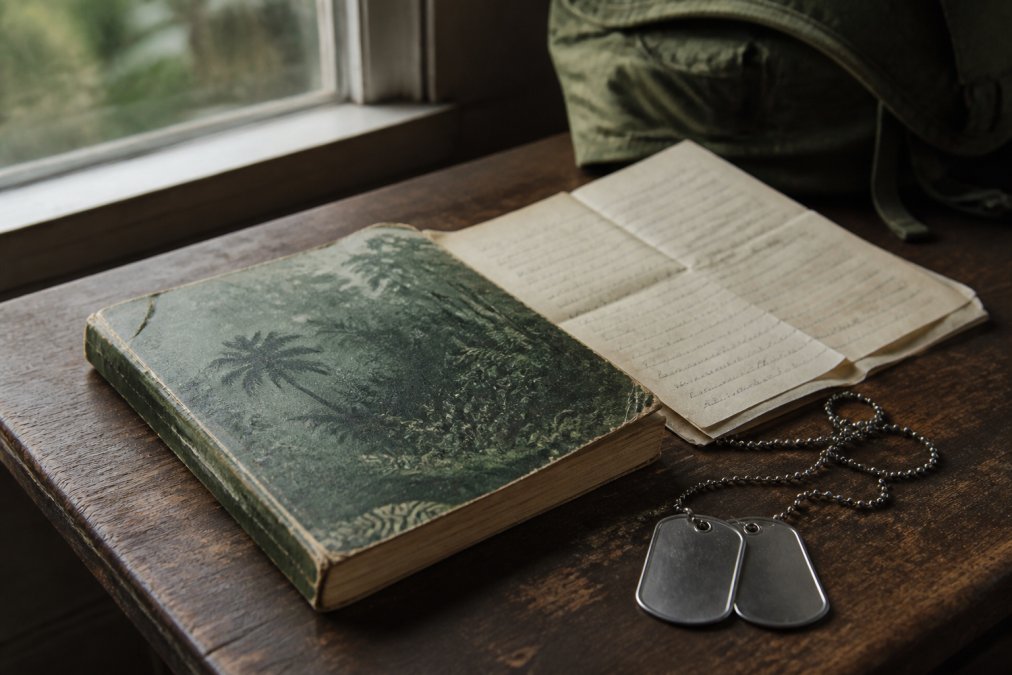
Infantry memoirs form the backbone of Vietnam War literature. These are the grunts, the platoon leaders, the RTOs, and the medics who humped the boonies for a 12-month tour and came home changed. If you only read one slice of this genre, read here first, the foot soldier's view is the one most other memoirs are measured against.
- If I Die in a Combat Zone, Box Me Up and Ship Me Home by Tim O'Brien (1973), a short, unsparing account of a tour with the Americal Division. O'Brien later turned the same material into fiction, which makes the nonfiction original a useful baseline for how memory and story diverge.
- A Rumor of War by Philip Caputo (1977), widely treated as the first major memoir by a Marine in Vietnam. Caputo was a lieutenant in the 1st Marine Division and was court-martialed over the death of two Vietnamese civilians, a fact he does not soften.
- Dispatches by Michael Herr (1977), technically a reporter's book, but written in the voice and rhythm of the infantry. It is the book most often cited by soldiers who say it got the language right.
- Chickenhawk by Robert Mason (1983), the definitive helicopter memoir. Mason flew the UH-1 Iroquois (the "Huey") on assault and resupply missions, and his chapters on the physics and terror of landing in a hot LZ are unmatched.
- Fields of Fire by James Webb (1978), a novel, but written by a Marine platoon commander and so closely drawn from his tour that it is routinely shelved with the memoirs. Read it alongside a nonfiction account to see what fiction can carry that reportage cannot.
- The Things They Carried by Tim O'Brien (1990), a hybrid of story and memoir. O'Brien labels it fiction, but the emotional record is his own. It belongs on this list because it is the book most often assigned in classrooms, and it shapes what new readers expect from the genre.
How to Verify Historical Accuracy in Memoirs
Learning how to verify historical accuracy in memoirs protects you from exaggeration. Memory is not a recording. It is a reconstruction, and time bends it.
Here is a simple checklist:
- Check the author's service record or unit history
- Cross-reference dates and locations against public records
- Look for a foreword by a historian or fellow veteran
- Compare events to official after-action reports
- Watch for claims that feel too neat or too heroic
Beyond the Infantryman: Nurses, Advisors, and Rear-Echelon Perspectives
Most Vietnam War memoirs come from the infantry. That leaves out a huge part of the story.
Audiobooks and Multimedia: Making Vietnam War Memoirs Accessible
Audiobooks have opened these stories to a wider audience. Many veterans now prefer listening, especially those who find print hard on the eyes.
What to look for in an audio edition:
- Narration by the author, when available
- Clear chapter markers for easy navigation
- Bonus interviews or archival audio
- Unabridged text, not a summary
Choosing Your Next Read: A Thematic Guide by Emotional Tone
Not every reader wants the same experience, and not every memoir ends when the tour does. The most useful way to choose is by emotional tone and by where the book sits on the arc from soldier to civilian, because the homecoming chapters are often the ones readers remember longest.
| Tone | What to Expect | Best For |
|---|---|---|
| Raw and visceral | Graphic combat, unfiltered language, present-tense immediacy | Readers who want the truth, no filter |
| Reflective | Late-life wisdom, quieter passages, moral reckoning | Readers processing the war's meaning |
| Harrowing | Trauma, loss, and the long recovery | Readers ready for heavy emotional weight |
| Wry and human | Humor between the horror, absurdity as survival | Readers who need moments of relief |
| Homecoming-focused | The return, the silence, the civilian readjustment | Readers interested in what came after |
A few patterns worth knowing before you pick:
- The return was often silent. Veterans of this war came home individually, not by unit, and many flew commercial flights in uniform to a public that was indifferent or hostile. Memoirs that cover this describe a readjustment with no ritual and no shared debrief, a sharp contrast to the unit rotations of later conflicts.
- Symptoms arrived late. Post-traumatic stress was not a recognized diagnosis in the DSM until 1980, years after most tours ended. Many authors describe two or three decades of undiagnosed symptoms before they sought help through the VA or a veteran peer group.
- Writing was the therapy. A striking number of these memoirs were published 20 to 40 years after the events, often after retirement or a health scare. The delay is part of the story: the reader is getting a memory that has been carried, not one that was filed immediately.
- The civilian chapters are where the moral argument lives. Combat chapters report what happened. Homecoming chapters argue about what it meant, and that is where authors disagree with each other most.
Conclusion: Preserving the Legacy of War Through Memoir
The challenge with Vietnam War memoirs is simple: the generation that lived it is fading. Every year, fewer first-hand accounts remain.
Frequently Asked Questions
What is considered the most authentic memoir of the Vietnam War?
Authenticity in a Vietnam War memoir comes down to verifiable details: unit designations, dates, locations, and corroboration from other veterans or official records. The most trusted memoirs are those where the author served in the role they describe, provide specific tactical and geographic details, and have been reviewed by historians or fellow veterans. Look for books that include maps, photographs, and source notes. No single memoir is universally considered 'the most authentic,' but titles that have stood the test of time tend to be those with transparent sourcing and unflinching, unfiltered narrative.
How can readers verify the authenticity of military memoirs?
Start by checking the author's service record through public databases or veteran associations. Cross-reference specific dates, unit names, and locations against official military histories. Read reviews from historians, veteran groups, and academic journals. Look for memoirs that include footnotes, appendices, or acknowledgments of research assistance. If a book claims to be a firsthand account but reads like a novel with reconstructed dialogue and no sourcing, treat it as fictionalized. Reputable publishers and veteran-run presses often vet memoirs before publication.
Are there new Vietnam War memoirs being published in 2026?
Yes. The 2026 publishing cycle includes a growing number of memoirs from veterans who served in support roles, nurses, advisors, and Vietnamese perspectives, not just infantry accounts. Small presses and independent authors are also releasing memoirs that might not appear on bestseller lists. To find them, check publisher catalogs, veteran organization newsletters, and independent bookstores that specialize in military history. Audiobook releases are expanding access, with many new titles arriving in both print and audio formats simultaneously.
How do personal memoirs differ from official military history accounts?
Official military histories focus on strategy, unit movements, and command decisions. Memoirs center on the individual experience: fear, boredom, camaraderie, moral ambiguity, and the sensory details of combat zones. A memoir gives you the human cost and psychological trauma in a way a tactical report cannot. For a full picture, read both. Memoirs provide the visceral, candid perspective; official histories provide the broader historical narrative and context. Together they create a more complete understanding of the war and its legacy.
The war's legacy lives in the people who tell it. Warren Robinson Books brings you authentic memoirs and personal reflections, each one a real voice from a real time. Browse our collection, pick a title, and keep these stories on your shelf. Add to Cart and start reading today.