
Quality Military History Book Collections: A 2026 Guide
Table of Contents
- Building Quality Military History Book Collections: A Framework
- How to Find the Best Military History Books for Your Shelf
- Military History Book Series Worth Collecting by Era
- Military Memoirs: Firsthand Accounts That Belong in Every Collection
- Military History Books for Beginners: Where to Start Reading
- Edition, Format, and Condition: What Collectors Should Compare
- Budget Tiers and Value: Building Quality Military History Book Collections at Any Price
- Conclusion
- Frequently Asked Questions
Last Updated: October 16, 2026
Building Quality Military History Book Collections: A Framework
Building quality military history book collections starts with balance, not volume. We've watched readers chase bestsellers only to end up with a shelf that repeats the same story five ways. A collection earns its value when it covers multiple conflicts, mixes sweeping histories with firsthand accounts, and holds up to re-reading.
The Four Pillars of a Balanced Collection
A balanced collection rests on four pillars: scope, perspective, format, and reliability.
- Scope means covering more than one war or era.
- Perspective means mixing strategic overviews with personal narratives.
- Format means deciding early between hardcover, paperback, leather-bound, or digital.
Most lopsided collections are missing one of these four: all overviews of one conflict means no perspective; all memoirs means no scope.
How to Find the Best Military History Books for Your Shelf
Finding the best military history books comes down to three habits: reading beyond the cover blurb, checking the author's sources, and favoring publishers with a track record in military history.
Start with the bibliography. A serious history lists its sources, and a thin bibliography on a thick subject is a warning sign. University presses and established military history publishers tend to hold authors to a higher standard than general-interest imprints chasing a trend.
Assessing Historical Reliability and Author Bias
Every military history carries an author's point of view, and recognizing that bias is part of reading well. A commander's memoir frames events differently than a historian working from archives decades later. Neither is automatically wrong, but they answer different questions.
A practical way to test reliability:
- Does the author cite primary sources, archives, or interviews?
- Is the bibliography substantial relative to the book's claims?
- Does the author acknowledge competing interpretations?
If a book fails three or more of these, treat it as entertainment rather than reference. That's fine, as long as you know which one you're buying.
Military History Book Series Worth Collecting by Era
Series give a collection structure and build depth across eras without guessing at quality.
Campaign and battle series. These cover a single operation, battle, or short campaign per volume.
Conflict overview series. One volume per war or theater, written for a general reader.
Primary-source and documentary series. These reproduce letters, after-action reports, diaries, and oral histories, often with editorial annotation.
Reference and atlas series. Order-of-battle compilations, campaign atlases, and unit histories.
Matching Series Type to Era
The four types do not distribute evenly across history.
- Ancient and medieval warfare. Campaign and reference series dominate, because surviving primary sources are thin and scholarship leans on archaeology and geography. Expect more maps, fewer memoirs.
- Early modern through the 19th century. Conflict overview and documentary series are strongest here. Letter collections and officer memoirs survive in quantity.
- World War I. Campaign series work well because operations were bounded and heavily documented. Documentary series built on letters and unit diaries are also abundant.
A Comparison Matrix That Actually Decides Something
| Criterion | What to Check | Why It Matters |
|---|---|---|
| Series type | Campaign, overview, documentary, or reference | Determines what gap it fills |
| Editorial consistency | Same general editor and standards across volumes | Predictable quality |
| Apparatus | Maps, orders of battle, notes, bibliographic essay | Separates reference from narrative |
| Sourcing | Primary sources cited, not just secondary summaries | Reliability |
| Format | Hardcover, paperback, digital | Shelf and budget fit |
| Availability | In print, reprint, or secondhand only | Long-term collectability |
| Completeness | Ongoing or concluded | Whether you can finish the set |
Two practical rules follow. First, buy two volumes before committing to the rest; editorial quality can drift after a general editor changes. Second, check whether a series is concluded or ongoing, an ongoing series can stall for years, and a stalled set is harder to complete secondhand.
Military Memoirs: Firsthand Accounts That Belong in Every Collection
Memoirs are where military history stops being abstract.
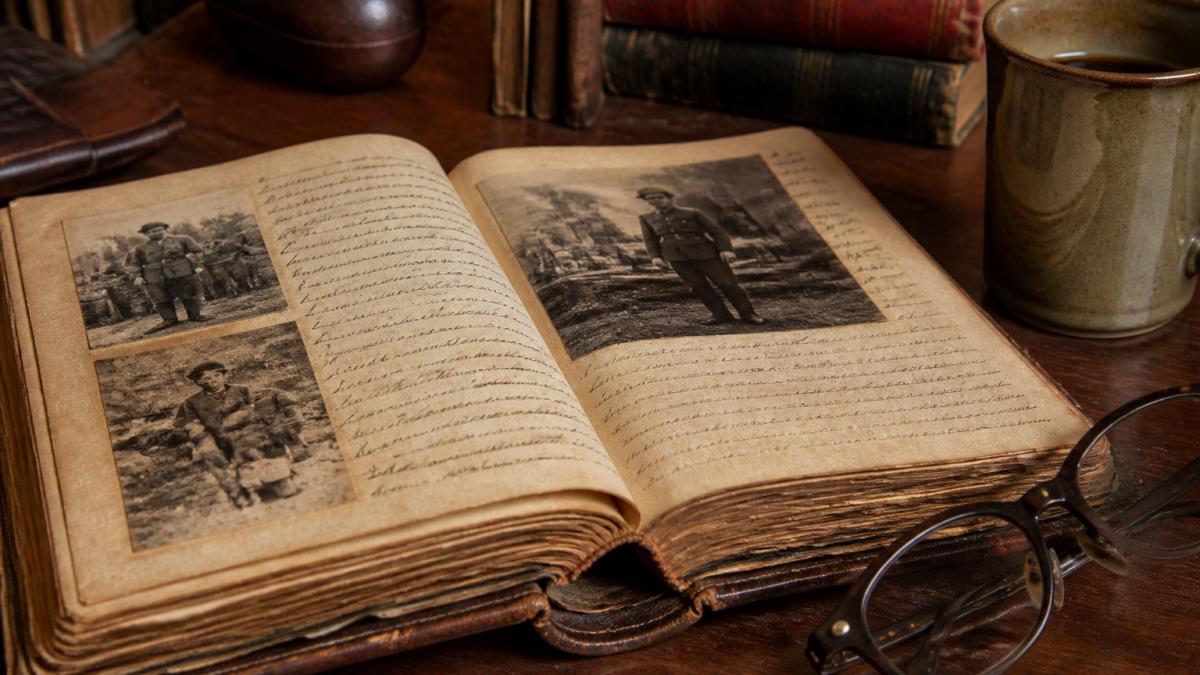
Vietnam-era memoirs in particular carry a weight later strategic analyses rarely match, capturing friendship, sacrifice, and the ordinary texture of wartime experience in a way maps and orders of battle never will.
What most guides miss is that memoirs need to be read as testimony, not as history. One person's view of a battle is a window, not a panorama.
Military History Books for Beginners: Where to Start Reading
Beginners should start with one accessible overview per conflict, then add a memoir to bring it to life. Dense academic monographs are the fastest way to lose momentum; the goal in your first year is coverage and enjoyment, not completeness.
A simple reading pathway:
- Pick one well-regarded general history of a conflict that interests you.
- Add one memoir from the same conflict for the personal perspective.
- Add one book on strategy or tactics to understand how decisions were made.
- Fill in a second conflict once the first feels familiar.
That's four books, and it gives you scope, perspective, and depth without overwhelming your shelf or budget. Add titles from there as curiosity pulls you.
Edition, Format, and Condition: What Collectors Should Compare
Format decisions shape both your budget and your shelf, so make them deliberately. Hardcover editions hold up better and often carry better maps and notes; paperbacks cost less and travel well; leather-bound editions appeal to collectors who want a title to last generations; digital editions save space and let you search text, which is useful for research.
Condition matters most for older and out-of-print titles. Check for a tight binding, an intact dust jacket, and clean pages, and be cautious about heavily marked ex-library copies. For reading copies, condition is a preference; for a collection you intend to keep, it's worth weighing.
Budget Tiers and Value: Building Quality Military History Book Collections at Any Price
Quality military history book collections do not require a large budget; they require priorities. Spend on the books you will re-read and reference, and buy the rest in whatever format keeps you reading. Here is a practical framework for cost, organized into three tiers.
Tier 1: The Starter Shelf
The goal here is coverage, not completeness. A starter shelf of four to six books can be assembled almost entirely from paperbacks and secondhand copies. The levers that matter:
- Paperback over hardcover for anything you plan to read once and lend out.
- Used and secondhand for out-of-print titles, where the reading copy is often a fraction of a collectible copy.
- Library sales and estate sales for bulk acquisitions, with the caveat that you inspect condition before buying.
At this tier, the priority is breadth: one overview per conflict, one memoir, one strategy or tactics title. A lopsided shelf of six books on a single battle is worth less than four books spanning four conflicts.
Tier 2: The Working Collection
This is where most serious readers land, and where value decisions get harder. You are now buying for re-reading and reference, which changes the calculus:
- Hardcover for keepers. Better paper, better maps, and a binding that survives repeated use.
- Annotated and illustrated editions where the annotations add real content, not just photographs.
- Series completion for the two or three series you have decided to finish, bought volume by volume rather than in a single order.
The working collection is also where edition starts to matter. A later reprint may add a new introduction, corrected maps, or a revised bibliography, additions often worth more than the difference in cover price, and the reason a cheap reprint can outperform a pricier early printing.
Tier 3: The Collector's Shelf
At this tier you are paying for scarcity, condition, and provenance, not better history, the content is usually identical to a paperback costing a fraction as much. What you are buying:
- First editions and first printings, where the printing statement on the copyright page is the thing to verify.
- Signed and association copies, where the signature or inscription connects the book to a person or event.
- Fine condition in original dust jacket, which is the single biggest driver of value for most 20th-century titles.
The honest advice: Tier 3 is a separate hobby from reading. If you want a quality collection you actually use, Tier 2 is where the value is. If you want a collection that holds or grows in value, Tier 3 rewards patience and condition knowledge far more than speed.
How to Judge Value at Any Tier
A simple test applies across all three tiers: cost per re-read. A $40 hardcover you return to five times is cheaper than a $15 paperback you read once. Apply that test before you buy, and the budget question mostly answers itself.
If you want to know what a specific title costs before you commit, check our site or reach out directly, and we will give you a straight answer in dollars.
Conclusion
The hard part of collecting isn't finding books, it's choosing them well, and that takes a framework rather than a shopping spree. Start with the four pillars, verify reliability before you buy, and let memoirs and overviews balance each other on the shelf. When you're ready to add firsthand accounts, Warren Robinson Books offers authentic military memoirs and lighthearted small-town tales from a local author, priced fairly and written to be kept.
Frequently Asked Questions
What are the best military history books for beginners?
Start with accessible overviews and firsthand memoirs rather than dense academic monographs. Look for titles that cover a single campaign or a soldier's wartime experience, since these give context without overwhelming detail. Memoirs from the Vietnam War era are often a good entry point because they combine personal narrative with historical events. Check publisher catalogs and library reading lists for curated recommendations, and browse a few pages before committing to a purchase.
How do I choose reliable military history books?
Check whether the author cites primary sources such as unit records, letters, or official after-action reports. Look for books published by established military publishing houses or university presses, which typically use peer review or editorial fact-checking. Cross-reference key claims against at least one other historical account. For memoirs, verify that the author's service record matches the timeline described. A book that acknowledges uncertainty and names its sources is usually more trustworthy than one that presents every detail as absolute fact.
Which military history book series are worth collecting?
Long-running series from established military publishers tend to hold their value and stay in print longer than one-off titles. Series organized by conflict, such as World War II or Vietnam, let you build depth on a single era. Look for series that include maps, orders of battle, and bibliographies, since these signal editorial care. Before buying a full series, check whether volumes are available individually and whether later editions revise earlier content.
What is the difference between a military memoir and a military history book?
A military memoir is a firsthand account written by someone who experienced the events, so it reflects one person's perspective, memory, and emotional response. A military history book is typically written by a historian who synthesizes multiple sources, including memoirs, official records, and interviews. Memoirs offer intimacy and authenticity; histories offer breadth and context. A strong collection includes both, because memoirs humanize the events that histories analyze.
How can I verify the accuracy of a military memoir?
Compare the memoir's timeline and locations against official unit histories or after-action reports, which are often available through military archives or veteran associations. Check whether the author's rank, unit, and dates of service match public records. Read reviews from historians or veteran publications, which frequently flag exaggerated or disputed claims. Keep in mind that memory is imperfect, so minor discrepancies in dates or dialogue do not necessarily mean the account is fabricated.
What should I look for in a collectible military history edition?
Condition matters most: a first edition with its original dust jacket in good condition holds far more value than a later printing without one. Check the copyright page for printing history and whether the edition is noted as revised or expanded. Leather-bound or slipcased editions appeal to collectors who want shelf presence, while paperback editions are better for reading and travel. Signed or inscribed copies carry a premium, but only when the signature can be authenticated.