
How to Verify Historical Accuracy: 7 Proven Steps
Table of Contents
- Step 1: Identify the Specific Assertions Being Made
- Step 2: Evaluating Primary Sources vs. Secondary Sources
- Step 3: Cross-Referencing and Corroboration Across Multiple Sources
- Step 4: How to Spot Historical Anachronisms
- Step 5: Assessing Source Credibility and Detecting Bias
- Step 6: Historical Fact Checking Tools and Digital Forensics
- Step 7: Building a Practical Verification Checklist for Non-Academics
- Conclusion: Making Historical Accuracy a Habit
- Frequently Asked Questions
Last Updated: September 27, 2026
Step 1: Identify the Specific Assertions Being Made
The first step in verifying historical accuracy is pinning down exactly what claim you are testing. A vague sense that "something feels off" is not a claim, you need a specific assertion.
Step 2: Evaluating Primary Sources vs. Secondary Sources
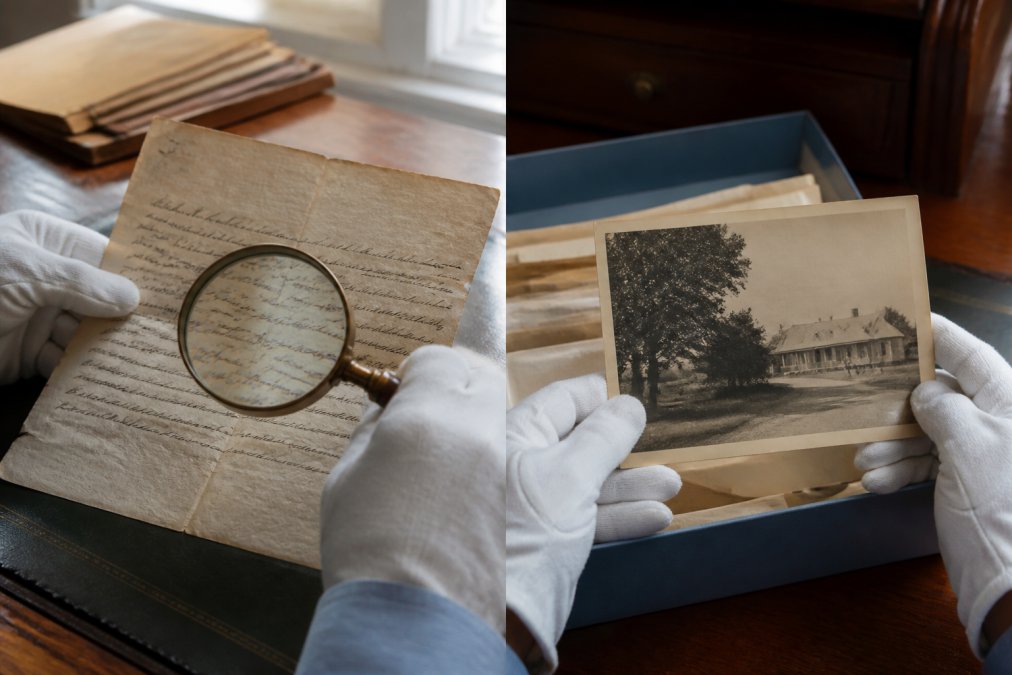
Primary sources are the raw material of history: letters, diaries, photographs, official records, and objects made at the time. Secondary sources are later accounts that interpret those materials, such as textbooks, documentaries, and biographies.
What Counts as a Primary Source?
A primary source is any item created during the period you are studying, by someone with direct knowledge of the events.
- Letters and diaries written during the war
- Official military records, orders, and after-action reports
- Photographs and film shot at the time
- Oral histories recorded with veterans
- Physical objects such as uniforms, medals, and equipment
When Secondary Sources Add Value
Secondary sources connect thousands of primary documents into a story you can follow. Use them to find the primary sources: a well-researched book cites its evidence in footnotes and a bibliography, and those citations are a map to the original material. Follow the map rather than trusting the summary.
Step 3: Cross-Referencing and Corroboration Across Multiple Sources
Corroboration means finding independent sources that agree. One source is a claim; two independent sources that agree are evidence; three or more from different origins start to look like fact. Independent is the word that matters, two newspaper stories that both copied the same wire report are one source wearing two hats.
Step 4: How to Spot Historical Anachronisms
An anachronism is anything placed in the wrong time period. It is one of the fastest ways to catch a false claim, and one of the easiest to miss if you do not know the era. A single wrong detail can sink an entire account: if a memoir set in 1968 mentions technology that did not exist until 1975, every other detail in that passage deserves a second look.
Common Anachronism Categories
- Technology: devices, weapons, or vehicles from the wrong decade
- Language: slang or phrases that entered use later
- Objects: clothing, packaging, or tools that did not yet exist
- Events: references to things that had not happened yet
- People: titles, ranks, or roles that came later
Check the smallest details first. They are harder to fake and easier to verify than sweeping statements.
Step 5: Assessing Source Credibility and Detecting Bias
Credibility comes down to three questions: who made this, why did they make it, and what could they actually know? Bias is not the same as lying. A soldier's letter home is biased toward reassurance, because he did not want his mother to worry. That bias does not make the letter worthless.
The Bias Types That Actually Distort History
Most guides stop at "watch for bias," which is useless until you can name the specific distortions. These patterns recur in historical documents:
- Selection bias: The archive contains what someone chose to keep. Letters that embarrassed a family got burned; letters that flattered a unit got donated. A surviving record is not a random sample.
- Hindsight bias: Memoirs written decades later fold later knowledge into earlier decisions. A veteran writing in 1995 may describe 1968 decisions as if he already knew how the war would end.
- Survivorship bias: We have detailed records from units that kept good paperwork and almost none from units that did not. The well-documented experience is not the typical one.
- Institutional bias: Official reports protect the institution that produced them. After-action reports tend to undercount friendly losses and overstate enemy ones. That is a pattern, not a conspiracy.
- Translation and transcription bias: A translated diary passes through a second mind. Idioms, ranks, and place names drift. Always ask whether you are reading the original or someone's rendering of it.
Cognitive Bias: The Researcher's Own Problem
Every bias above lives in the source; confirmation bias lives in you. It is the tendency to search for, interpret, and remember evidence that supports what you already believe, the most common reason amateur historical research goes wrong. Before you start searching, write down what evidence would change your mind. If you cannot name any, you are not researching, you are collecting.
Three habits blunt confirmation bias:
- Search for the disconfirming source first. If you believe a unit was at a certain location on a certain date, go looking for the document that places it somewhere else.
- Steelman the opposing account. Write the strongest version of the interpretation you disagree with, then check it against sources.
- Date your notes. Record when you formed each conclusion. Beliefs that harden before the evidence arrives are the ones to distrust.
A Credibility Scoring Pass
When you have several sources on the same claim, score each on four axes and note the score next to your citation:
- Proximity: Was the author present? (Direct witness > secondhand > later synthesis)
- Contemporaneity: Was it written during or near the event? (Same week > same year > decades later)
- Independence: Does it trace back to a unique origin? (Original record > wire copy > reblog)
- Verifiability: Can the key details be checked against another record? (Named units, dates, and places > vague references)
Where to Check Institutional Credibility
For published secondary work, the publisher's reputation and the presence of citations do real work. University presses and major historical associations apply peer review; trade publishers often do not. A history book with no footnotes, bibliography, or archival citations is a narrative, not a research product, read it as storytelling, not evidence.
National Archives research and records guidance
Step 6: Historical Fact Checking Tools and Digital Forensics
Digital forensics is the practice of examining a document, photo, or recording for signs of alteration or a false date. It used to be specialists' work; today basic tools are open to anyone, and most of the work is careful looking rather than expensive software.
Verifying Historical Photographs
Start with the physics before you touch the metadata. Shadows, reflections, and perspective are hard to fake consistently, especially in older images.
- Shadow direction: All shadows in a single outdoor scene should point the same way and be consistent with a single light source. A shadow pointing the wrong way is a red flag.
- Reflections: Look at windows, eyeglasses, polished metal, and puddles. A reflection that shows something not in the frame, or a photographer who should be visible but is not, is a red flag.
- Perspective and scale: Objects in the background should be smaller in proportion to their distance. Composited images often get this subtly wrong.
- Edge artifacts: Zoom in on the boundary between a person and the background. A faint halo, a repeated texture, or a straight-line seam suggests a composite.
- Period details: Uniforms, insignia, vehicles, signage, and even the paper the photo is printed on can date an image. A 1944 photograph showing a 1950s vehicle is not a 1944 photograph.
Verifying Documents and Paper Records
For a physical document, the material tells the story as much as the words:
- Paper: Watermarks, fiber content, and manufacturing marks can date paper to within a few years. A letter supposedly written in 1863 on paper manufactured in 1890 is a forgery.
- Ink: Iron gall ink, ballpoint ink, and modern gel inks behave differently under ultraviolet light. A document written in two different inks is suspicious.
- Printing method: Letterpress, typewriter, offset, and laser printing each leave distinct marks. A typeface that did not exist when the letter was supposedly written is a giveaway.
- Handwriting and signature: Compare against known examples from the same person. Consistent letterforms, pen pressure, and slant are hard to fake across a long document.
Verifying Audio and Video
Recorded media adds a layer of technical evidence:
- Audio: Listen for room tone. A recording with no background noise, or with background noise that changes abruptly mid-sentence, has likely been edited. Splices often show up as a click or a sudden shift in hiss.
- Video: Watch for frame-rate inconsistencies, sudden lighting changes, and audio that does not match lip movement. Older analog video has characteristic artifacts that digital edits tend to break.
- Provenance: Where did the recording come from? A recording with no chain of custody, no named source, no archive, no original media, is a lead, not evidence.
AI-Assisted Verification, and Its Failure Modes
AI tools can speed up research, but they can also invent sources that do not exist. A large language model generates text by predicting plausible continuations, not by looking anything up. When it produces a citation, the author, title, journal, and page number may all be fabricated, and formatted correctly.
A practical workflow:
- Use AI for leads, not answers. Ask it to suggest search terms, possible archives, or related events. Treat every output as a hypothesis.
- Never cite an AI-generated source without opening it. Search the exact title and author in a library catalog or archive. If you cannot find the document, assume it does not exist.
- Cross-check dates and names against a real reference. AI models frequently shift dates by a year or two and conflate people with similar names.
- Use AI for translation and summarization with caution. Both are useful, but both can smooth over ambiguity that matters.
Chain of Custody for Historical Media
For any document, photo, or recording you intend to rely on, write down where it came from: who held it, how it was acquired, and whether it has been published or exhibited before. A source with a documented chain of custody is far stronger than one that appeared without explanation. If the chain has gaps, note them.
A file's metadata can be edited in seconds. Never treat a creation date stored in a file as proof of when the underlying event happened. Use it as one clue among many.
A Quick Digital Check List
- Shadows and reflections consistent within the image
- Period details match the claimed date
- Metadata inspected but not trusted alone
- Paper, ink, and printing method consistent with the era
- Audio room tone continuous
- Video frame rate and lip sync consistent
- Every AI-suggested source opened and confirmed
- Chain of custody documented, including gaps
Step 7: Building a Practical Verification Checklist for Non-Academics
You do not need a graduate degree to check a historical claim. You need a repeatable process. Use this checklist for any book, article, or family story you want to test.
| Step | What to Do | Time Needed |
|---|---|---|
| 1 | Write the claim in one sentence | 5 minutes |
| 2 | Split it into who, when, where, what | 5 minutes |
| 3 | Find one primary source | 30-60 minutes |
| 4 | Find two independent sources | 1-2 hours |
| 5 | Check for anachronisms | 15 minutes |
| 6 | Note the bias in each source | 15 minutes |
| 7 | Run a digital check on any media | 20 minutes |
| 8 | Write down what you could not confirm | 10 minutes |
- Claim written as one testable sentence
- Primary source located
- Two independent sources that agree
- No anachronisms found
- Bias and purpose of each source noted
- Media checked for edits
- Unconfirmed points listed
Keep a running "unconfirmed" list as you read. It stops you from treating a guess as a fact three chapters later.
Conclusion: Making Historical Accuracy a Habit
Verification is a habit, not a one-time task. The more you check small details, the faster you spot the big problems, and that habit separates a memorable memoir from a forgettable one.
National Archives research and records guidance
Smithsonian Institution research resources
Frequently Asked Questions
How do historians verify historical sources?
Historians verify sources through a process called source criticism, which examines who created a document, when, why, and for what audience. They check provenance (the record of ownership and origin), compare the source against independent accounts, and assess whether the creator had firsthand knowledge. For military memoirs, this means checking dated original documents, service records, and corroborating details like unit movements, equipment, and locations against official archives and peer-reviewed histories.
What is the difference between primary and secondary sources in history?
Primary sources are original materials created during the period being studied: letters, diaries, photographs, official military orders, and eyewitness accounts. Secondary sources interpret and analyze primary evidence after the fact, such as history books, documentaries, and scholarly articles. Both matter for verification. Primary sources provide raw evidence, while secondary sources offer scholarly consensus and historical context that help you judge whether a primary source is representative or an outlier.
How can readers spot anachronisms in military memoirs?
Anachronisms are details that do not belong to the time period described. Check equipment model numbers, weapon designations, slang, technology, and rank structures against the era. For example, a Vietnam War memoir mentioning a weapon or communication device not yet in service would be a red flag. Cross-reference dates, place names, and unit designations with historical records. Even small details like currency, clothing, or popular music can reveal whether a narrative was carefully researched or loosely constructed.
Why is cross-referencing essential for historical verification?
No single source, even a primary one, is fully reliable. Eyewitness accounts contain memory gaps, bias, and personal perspective. Cross-referencing means checking one account against independent sources: other eyewitnesses, official records, photographs, and peer-reviewed histories. When multiple independent sources corroborate the same detail, confidence rises. When they conflict, that tension itself is valuable because it tells you where further investigation is needed. This method is the backbone of evidence-based historical methodology.